
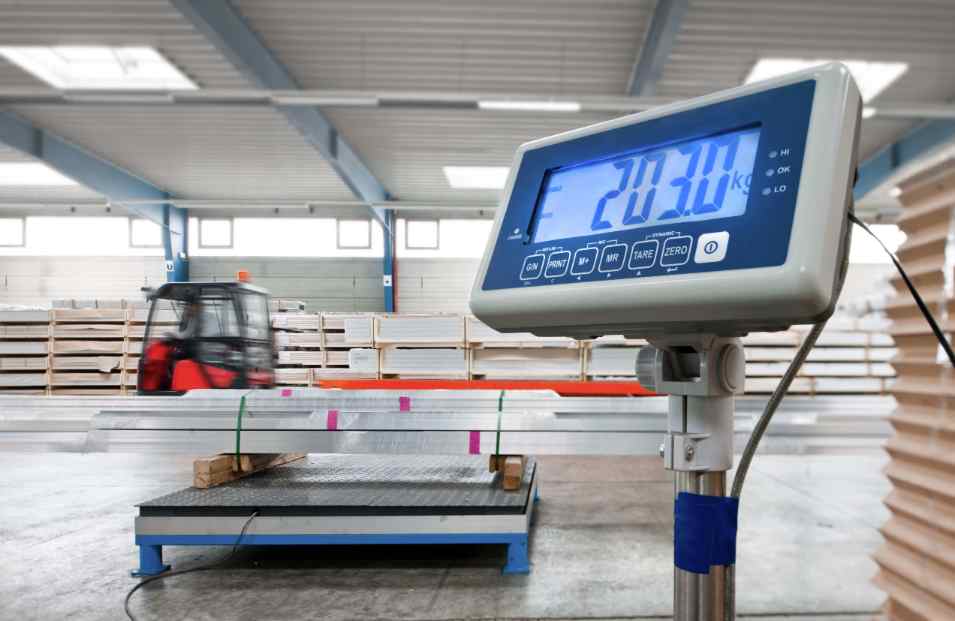
Your production line stopped at 2 AM. A batch failed compliance checks. Nobody knows why, until someone traces it back to a scale that drifted 3% off calibration three weeks ago. That one error triggered a full recall review. This is the real cost of ignoring your industrial weighing systems.
According to the National Institute of Standards and Technology (NIST), weighing instrument errors cost U.S. businesses an estimated $1 billion annually in product giveaway, rework, and compliance failures. (Source)
Why Do Industrial Weighing Systems Fail Operations That Seem Fine?
Most failures don’t announce themselves. They quietly compound. In my experience, the mistake I see most often is this: decision-makers buy a scale based on capacity alone.
They ignore environmental factors, integration requirements, and calibration schedules. The scale works, technically. But it doesn’t work for the operation.
Here is what actually happens:
- A scale rated for 500 kg sits near a conveyor vibrating at 60 Hz; readings fluctuate constantly.
- Nobody recalibrates after a facility temperature change; drift accumulates silently.
- The scale outputs data to a clipboard instead of your ERP, and traceability breaks down.
The system isn’t broken. The selection and setup process was.
What Types of Industrial Scales Actually Match Your Process?
Not all scales are built for the same environment. Choosing wrong costs you accuracy and uptime.
High-Volume Production Lines
Conveyor scales and checkweighers work best here. They weigh in motion without stopping the line. Look for systems with automatic zero-tracking and reject mechanisms built in.
Harsh or Hazardous Environments
You need ATEX-rated or IP69K-certified equipment. Standard scales corrode, short out, or give false readings in washdown, chemical, or explosive-risk zones.
How Does Poor Calibration Silently Drain Your Bottom Line?
Here is what actually works, and what most facilities skip.
Calibration isn’t annual. It’s event-driven. Recalibrate after:
- Any equipment move or relocation.
- Significant temperature or humidity shifts.
- A hard impact or overload event.
- Software or firmware updates on digital indicators.
The mistake I see most often is treating calibration as a checkbox. One pharmaceutical client I worked with found a 0.8% drift on a filling line scale. Over 3 shifts, that drift added up to 400 kg of product giveaway per week. Nobody caught it for six months.
Why Integration Is the Step Most Buyers Skip
A scale that doesn’t talk to your systems is just a number on a screen.
What proper integration looks like:
- Direct data feed into your ERP or MES platform.
- Real-time alerts when readings fall outside tolerance.
- Automatic batch records tied to individual weigh events.
- Remote monitoring across multiple production sites.
In my experience, operations that integrate their weighing data reduce manual entry errors by over 60%. That’s not a feature, that’s operational risk reduction.
Conclusion
Your weighing system sits at the centre of product quality, compliance, and operational efficiency. Get it wrong, and every downstream process pays the price.
Three things to do right now:
- Audit your current calibration schedule; if it’s annual or “when something seems off,” fix that first.
- Map your scale outputs. If data isn’t flowing into your ERP automatically, you have a traceability gap.
- Match your scale to your environment, not just your weight range.
The right industrial weighing system doesn’t just measure. It protects your process, your product, and your compliance standing. Start with the right equipment. Your operation depends on it.