
In the fast-paced world of logistics and warehousing, time is the most valuable currency. Every time a forklift operator has to take a detour, wait for a station to clear, or manually log data, you are losing seconds that add up to hours over the course of a week. Optimizing your workflow often starts with your equipment.
This is why searching for a high-quality pallet scale for sale is about more than just buying a piece of machinery; it is about investing in the operational flow and profitability of your business.
Whether you are shipping freight, receiving bulk inventory, or managing a recycling facility, the scale you choose determines how smoothly your day-to-day operations run. However, with so many options on the market, it can be difficult to know which specific type suits your needs.
Floor Scales vs. Pallet Jack Scales
When browsing for pallet scales, you will generally encounter two main categories. Understanding the difference is vital for your floor plan.
- Floor Scales:
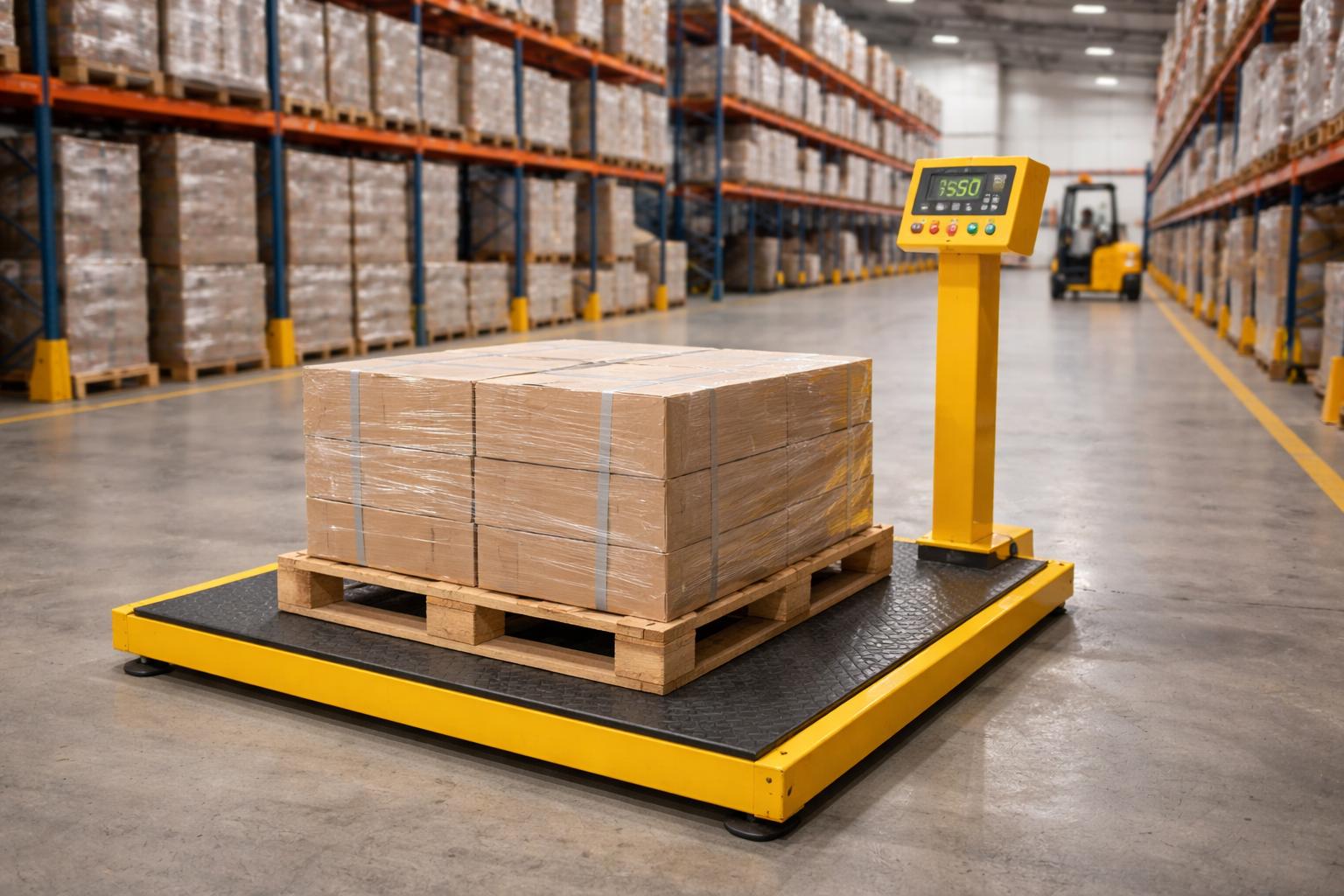
These are heavy-duty, stationary platforms, usually 4×4 or 5×5 feet, that sit flat on the warehouse floor.
- Best For: High-volume shipping hubs where forklifts are constantly zipping around.
- The Setup: They usually require a ramp so pallet jacks can roll onto them, or they are placed in a “pit” to sit flush with the floor.
- Durability: These are built like tanks. They are designed to withstand the shock loading of a forklift dropping a heavy pallet.
- Pallet Jack Scales: These are mobile weighing units. Imagine a standard pallet jack, but with a built-in scale and digital display.
- Best For: Tight spaces and “weigh-on-the-go” efficiency.
- The Advantage: Instead of bringing the pallet to the scale, you bring the scale to the pallet. You can lift, weigh, and move the product to the loading dock in a single motion.
Why “Legal for Trade” Matters
One term you will see frequently is NTEP (National Type Evaluation Program). If you are using your scale to determine shipping costs or to sell a product by weight, you legally must use an NTEP-certified scale.
If you buy a cheaper, non-certified scale, you might save money upfront, but you expose your business to liability. If a freight carrier re-weighs your shipment and finds a discrepancy, you will be hit with adjustment fees. Over time, these fees cost significantly more than the price of a proper commercial scale. An NTEP scale ensures that 2,000 lbs is exactly 2,000 lbs, keeping you compliant with federal regulations.
Durability and Connectivity
Finally, consider the environment. Warehouses are dusty, dirty, and prone to impacts. Look for scales made with checker-plate steel surfaces, which provide grip and prevent pallets from sliding.
Furthermore, in the digital age, writing things down on a clipboard is obsolete. Modern pallet scales often come with RS-232 ports or Bluetooth capabilities. This allows the scale to send weight data directly to a printer or a computer system, reducing human error and speeding up the labeling process.
Conclusion
Your weighing equipment is the gatekeeper of your inventory and your shipping costs. By choosing the right floor or mobile scale, you ensure accuracy and speed. Don’t just look for the lowest price; look for the tool that solves your specific workflow bottlenecks.